
- Paintball Apparel
- Accessories
- Arm Bands
- Arm Warmers
- Back Packs
- Bandana & Head Bands
- Denim Headbands
- Banners
- Barrel Covers
- Paintball Barrel Swabs
- Barrel Sleeves/Bands
- Beanies
- Embroidered Badges
- Chenille Patches
- Blank Patches
- PVC Patches
- Night Glow Patches
- Sublimated Patches
- Sublimated Key Chains
- PVC Key Chains
- Goggle Bags
- Headwraps
- Shemagh
- Pods
- Pod Bags
- Duffle Bags
- Tactical Vests
- Wallets
- Paintball Gloves
- Tactical Gear
- Tactical Backpacks
- Tactical Beanies
- Tactical Belts
- Tactical Caps
- Tactical Face Covers
- Tactical Gloves
- Tactical Gun Bags
- Tactical Gun Holsters
- Tactical Harness
- Tactical Jackets
- Tactical Jerseys
- Tactical Pants
- Tactical Pouches
- Tactical Protective Pads
- Tactical Radio Pouches
- Tactical Shemaghs
- Tactical Shirts
- Tactical Vests
- Airsoft Gear
- Casual Wears


How to Design Paintball Jerseys That Tell Your Team’s Real Story

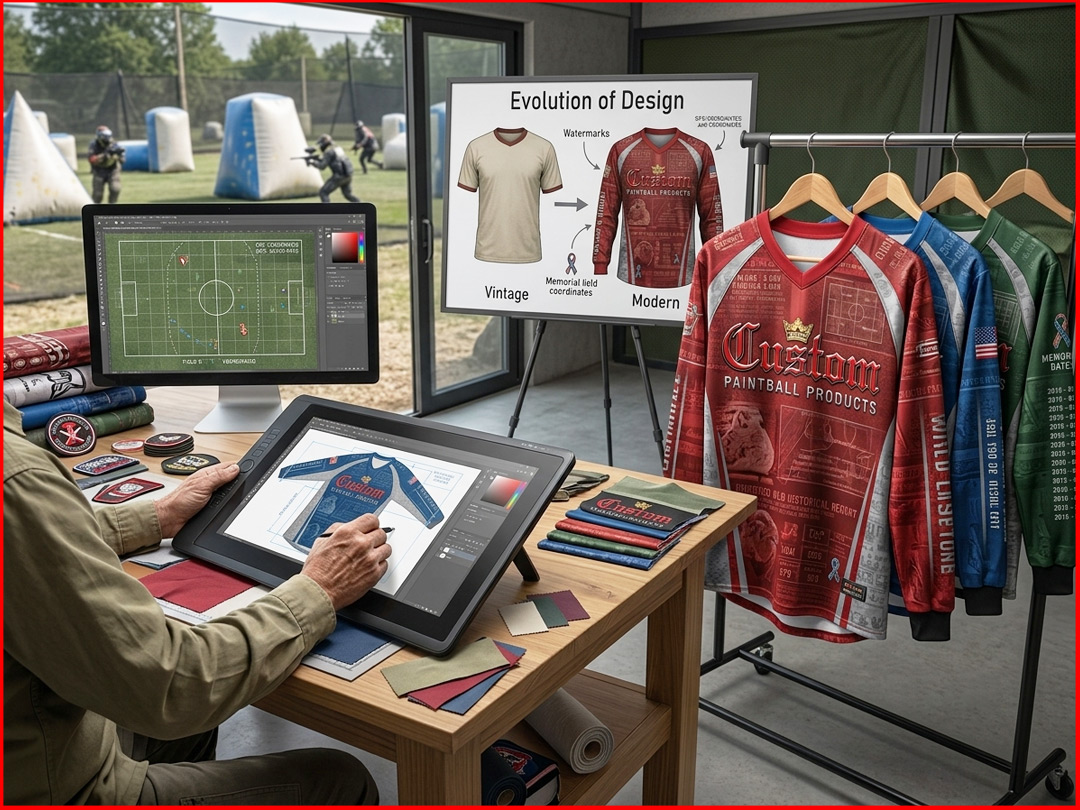
Narrative Design: Telling Your Team’s Story Through Custom Jerseys
Your jersey can do more than show a logo. It can tell your team’s whole story. Custom narrative paintball jerseys use small design details, like watermarks, field coordinates, and memorial symbols, to turn a plain uniform into a piece of team history. Clubs that have played together for years have stories worth keeping. A jersey is one of the best ways to keep that story alive, game after game.
This guide compares narrative jerseys to regular custom jerseys. It shows you what design elements matter most, how to use them, and mistakes to avoid. If your club has history, this article will help you wear it.
What Is Narrative Design in Jersey Making?
Narrative design means adding a story to your jersey’s graphics. It’s not just a name and number. It’s details that mean something to your team.
Think of it like this: a normal jersey says, “This is our team.” A narrative jersey says, “This is who we are, where we’ve been, and who we remember.”
Clubs use narrative design to add:
- Watermarks: faint background images tied to the team’s identity
- Field coordinates: the exact location of a home field, printed like map data
- Memorial symbols: small tributes to teammates, seasons, or events
- Timeline marks: founding year, milestone wins, anniversaries
- Local landmarks: hills, tree lines, or bunkers unique to a home field
None of these need to be big. Often, the smaller the detail, the more powerful it feels to players who know what it means.
Why Team History Matters More Than a Logo
A logo tells people what your team is called. History tells people what your team has done.
Long-standing divisional clubs build up years of shared memories. New players join. Old players retire. Fields change. But the story stays. A jersey with narrative design keeps that story visible, even to players who weren’t there for the early years.
This matters most for:
- Clubs with 5+ years of active play
- Teams that have lost or honored a teammate
- Clubs tied closely to one home field
- Divisional teams competing under a shared regional identity
- Alumni groups that want to reconnect through gear
A jersey isn’t just gear in these cases. It’s a record.
Comparative Overview: Narrative Jerseys vs. Standard Custom Jerseys
Not every jersey needs a story built in. But if your club has history, the difference matters a lot.
| Feature | Standard Custom Jersey | Personalized Graphic Jersey | Narrative-Designed Jersey |
|---|---|---|---|
| Team name/number | Yes | Yes | Yes |
| Logo placement | Front/back | Front/back, sleeves | Front/back, sleeves, hidden details |
| Color scheme | Team colors | Team colors + accents | Colors tied to field, history, or memory |
| Watermark elements | Rare | Sometimes | Standard |
| Field coordinates | No | No | Often included |
| Memorial symbols | No | Rare | Common, done with care |
| Emotional connection | Low | Medium | High |
| Best for | New teams | Growing teams | Established, long-standing clubs |
The takeaway: narrative design isn’t “extra decoration.” It’s a different purpose. Standard jerseys identify a team. Narrative jerseys represent one.
Core Design Elements Explained
1. Watermark Team Tops
A watermark is a faint image placed behind the main jersey design. It’s subtle. Most people won’t notice it unless they look closely.
Common watermark ideas:
- An outline of the home field
- A founding-year number
- A silhouette of the team mascot
- A repeated small symbol tied to team identity
Watermarks work well because they don’t compete with the main logo. They add depth without adding clutter.
Example: A club founded in 2011 might use a faint “11” pattern behind their jersey number, visible only up close.
2. Field Coordinates
Field coordinates are the GPS-style numbers for your home field, printed like a map label. This trend has grown popular with clubs that play at one field for many seasons.
Coordinates are usually:
- Small
- Printed near the collar, sleeve, or lower hem
- Styled like a stamp or tag, not a bold design element
This detail matters most to teams whose identity is tied to a specific piece of land, a converted farm field, a wooded course, or a long-running rental facility.
3. Memorial Symbols
Memorial symbols honor a person, season, or event. This is the most emotional part of narrative design, and it needs the most care.
Good memorial design is simple. A small star. A set of initials. A single line of text. Overdoing it can feel heavy on a jersey meant for fast movement and rough play.
Do:
- Use small, respectful placement (sleeve, collar tag, inner hem)
- Ask the team or family before using a name
- Keep the symbol consistent across all jerseys, not just one player’s
Don’t:
- Use large photos or portraits
- Place symbols where paint hits will damage them constantly
- Add memorial elements without team agreement
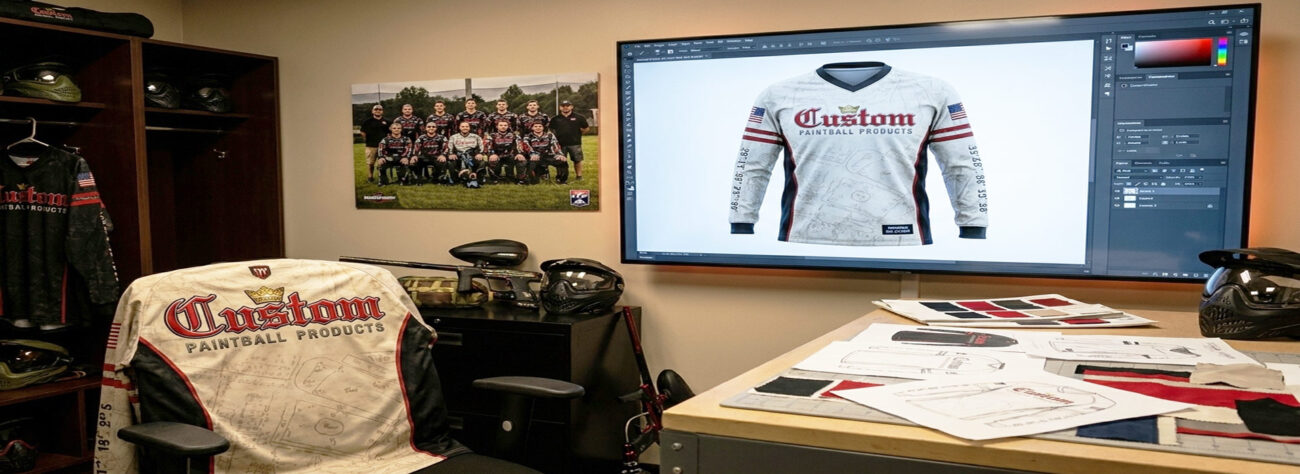
How Divisional Clubs Build Jersey Stories: A Step-by-Step Approach
Building a narrative jersey isn’t complicated, but it works best with a plan.
Step 1: Collect your team’s history. Talk to founding members. Ask about early seasons, big wins, and any teammates who should be remembered.
Step 2: Pick 2–3 story elements. Don’t try to fit everything. A watermark, one coordinate, and one memorial symbol is usually enough.
Step 3: Decide placement. Big elements go where they’re seen. Personal elements go where they’re private: sleeves, collars, or inner tags.
Step 4: Choose color meaning. Many clubs tie colors to something real: field dirt, forest green, a retired jersey number, or a founding year.
Step 5: Review with the team. Since this jersey represents everyone, get feedback before printing. Memorial elements especially need group approval.
Step 6: Work with a designer who understands paintball gear. Narrative design needs to survive paint hits, washing, and heavy movement. Not every graphic designer understands this. A paintball-specific apparel expert will know what holds up and what fades fast.
Common Mistakes Clubs Make With Narrative Jerseys
Even good ideas can go wrong without planning. Watch for these:
- Too many symbols. A jersey with five meanings crammed together looks busy, not meaningful.
- Placing memorial details in high-wear zones. Chest and shoulder areas take the most paint hits and washing stress.
- Skipping team input. A jersey meant to represent the whole club shouldn’t be designed by one person alone.
- Using colors with no real reason. Random colors don’t add story. Chosen colors do.
- Making text too small to read from a distance. Some details, like team mottos, need to be seen, not just felt.
- Forgetting print durability. Watermarks and fine details can blur or crack if the wrong print method is used.
A good rule: if a new player has to ask “what does that mean?”, that’s fine. If they can’t even see it, or it fades in one season, that’s a problem.
Table: Matching Design Elements to Team Type
| Team Type | Best Narrative Elements | Why It Fits |
|---|---|---|
| New club (1–2 years) | Simple watermark, color meaning | Builds identity early without overreach |
| Established club (5+ years) | Field coordinates, timeline marks | Shows a real, lived history |
| Club with a lost teammate | Memorial symbol, retired number | Honors memory with respect |
| Multi-field divisional team | Regional map watermark | Ties scattered games to one identity |
| Alumni/legacy team | Founding-year detail, past logos | Connects old and current players |
Real-World Style Example
Picture a club that’s played the same wooded field for eight seasons. They’ve had one teammate pass away, three championship wins, and a nickname the whole division knows them by.
Their narrative jersey might include:
- A faint tree-line watermark across the back
- Field coordinates stitched small near the collar
- A single star on the sleeve cuff for their late teammate
- Their founding year worked into the number font
None of this is loud. But every player on that team knows exactly what it means. That’s the goal of narrative design, meaning over decoration.
Why Work With a Designer Instead of a Template
Templates are fast. But narrative jerseys aren’t really about speed. They’re about accuracy and respect for a team’s real story.
A generic template can’t:
- Know your field’s actual layout
- Understand how your club talks about its history
- Handle memorial requests with the right sensitivity
- Balance small details with print durability
This is where working directly with a designer matters. At custompaintball.co, designers take time to understand a team’s background before building any graphic. That means asking questions, reviewing history, and making sure sensitive details, like memorials, are handled with care, not guesswork.
A one-on-one design session also solves practical problems early: placement, print method, fading risk, and how details will look after months of play. Templates can’t catch these issues. A real conversation can.
Frequently Asked Questions
Q: How small can a watermark be before it’s not visible?
Most watermarks stay readable down to about 1 inch in width, depending on the fabric and print method. A designer can test this before final printing.
Q: Can memorial symbols be added to only one jersey, or all of them?
Most clubs choose to add memorial details to every jersey, not just one. This keeps the tribute equal across the whole team.
Q: Do field coordinates need to be exact?
Not always. Some clubs use the real GPS coordinates. Others use a stylized version that just feels accurate to players. Either works, as long as the team agrees.
Q: How long does a narrative jersey design usually take?
Simple designs can take a few days. Jerseys with multiple story elements, watermarks, coordinates, and memorial symbols usually take longer, since each detail needs review and approval.
Q: Will these details survive regular paintball wear?
Yes, if printed correctly. This is why placement and print method matter so much. A trained designer will know which techniques hold up best under repeated hits and washing.
Q: Can new teams use narrative design too, or is it only for older clubs?
New teams can absolutely start now. Founding-year details and color meaning are easy ways to begin a story that grows over time.
Final Thoughts
A jersey is more than gear. For long-standing clubs, it’s a record of everyone who ever wore it.
Narrative design turns a plain uniform into something players are proud to put on. Watermarks, field coordinates, and memorial symbols don’t need to be loud to matter. They just need to be true to the team.
If your club has a story worth telling, don’t leave it to a template. Work one-on-one with an expert designer at custompaintball.co and build a jersey that actually represents your history. Book a creative consultation today and start turning your team’s story into something everyone can wear.
